



In mid-March, the situation involving Iran and other countries has influenced the global economy and aviation industry. The United Arab Emirates experiences a disturbance in its tourism as Iran continues to attack cities, including Dubai. Not only that, the war involving missiles and drones caused many flights to be delayed as they had to go around the hazard area, and the blockade of the Strait of Hormuz caused the oil prices to spike as it supplies almost 20% of global oil flows.
The Fuel Shock
Within just three weeks, the price of Brent Crude oil had surged from $70 to $125 per barrel. This was caused by Iran's blockade of the Strait of Hormuz, which led to a 97% drop in tanker traffic. Since around 20 million barrels of oil pass through the Strait, the world is facing nearly 15 million barrels per day, according to Bloomberg, making oil prices rise as days pass.
This also means the rise of gas prices. According to the Center for American Progress, the United States faced an average of 48 cents increase in gasoline prices, with Washington and California reaching $4.76 and $6.50 per gallon, respectively. In Europe, prices of diesel reached over €2/ liter, raising the cost of transporting food and consumer goods by diesel-powered trucks.

Souce:REUTERS
Since it raises the transportation costs of many imports and exports, experts say it can potentially increase the prices of our daily goods to compensate for that loss.
As mentioned, the closure of the Strait of Hormuz will limit the global oil flow, causing gas prices to surge. Not only that, but it will also impact the global LNG flow, impacting the prices of LPG, natural gas, and more.
The blockade also affects many countries that depend on imported energy. According to CNN, fuel shortages caused by this war forced the Philippines to declare a national energy emergency. The country imports 98% of its oil from the Gulf, becoming the first country to declare an emergency due to the shortage after its diesel and gasoline prices more than doubled.
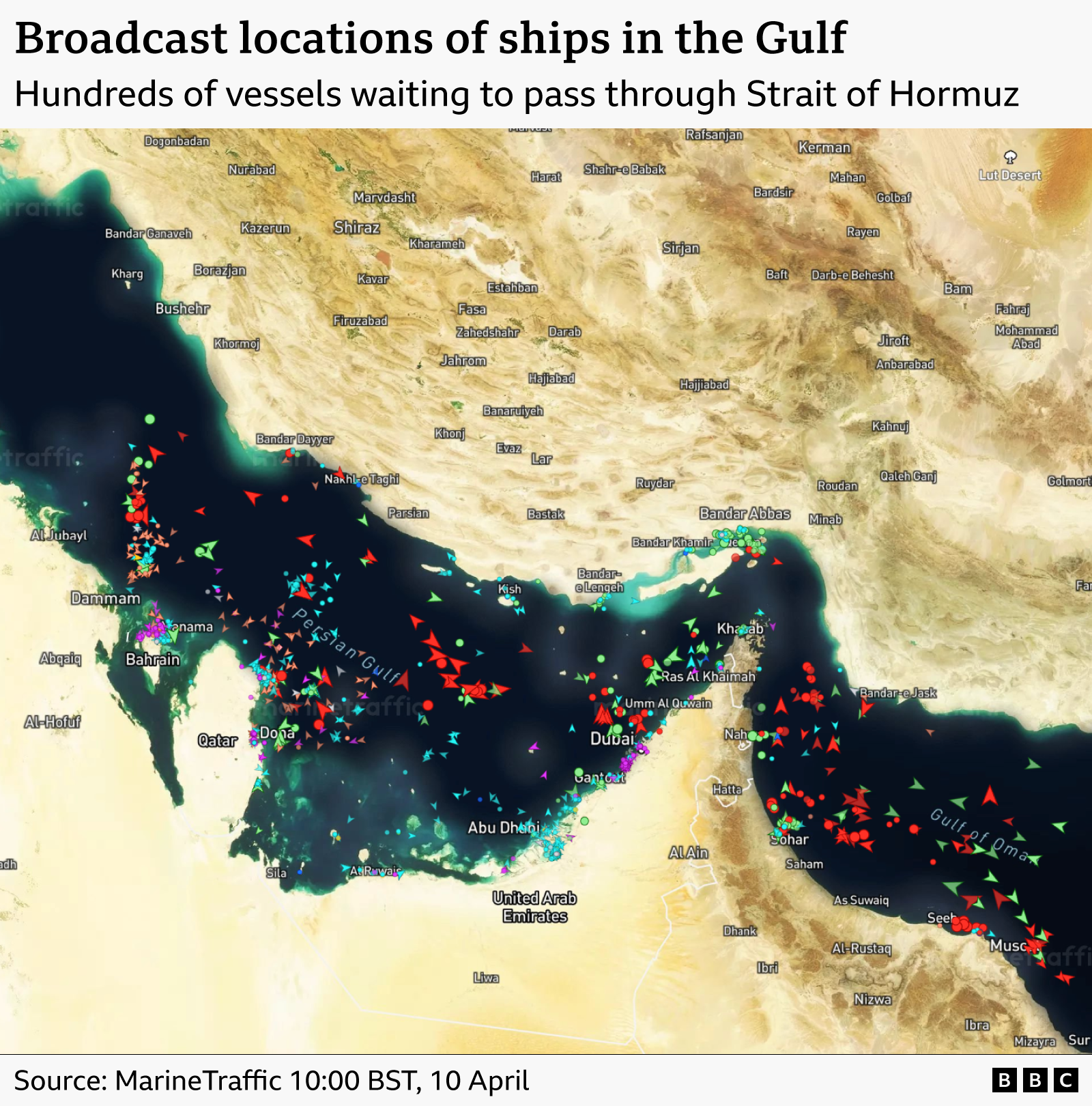
Cargo ships around Strait of Hormuz
Source: MarineTraffic, BBC
Despite the blockade, some countries with closer ties to Iran have managed to partially maintain oil and trade flows through the Strait Hormuz. One example is China, one of the major buyers of Iranian Oil. China continued their shipments through the Strait using less visible or untracked shipping methods to avoid sanctions. Also, other countries like India and Pakistan were able to receive limited shipments through Strait of Hormuz, reliving the tight oil supplies caused by the situation.
The Economy
Beyond energy, the conflict involving Iran has created a significant instability in the global financial market. For example, S&P 500 and FTSE 100 experienced a sudden drop, from 4.5% to 9%, during the periods of conflict, due to investors pulling out money from riskier assets. Also, the stocks of companies that rely heavily on global trade and transportation tend to be most affected, as well as airlines and logistics companies.
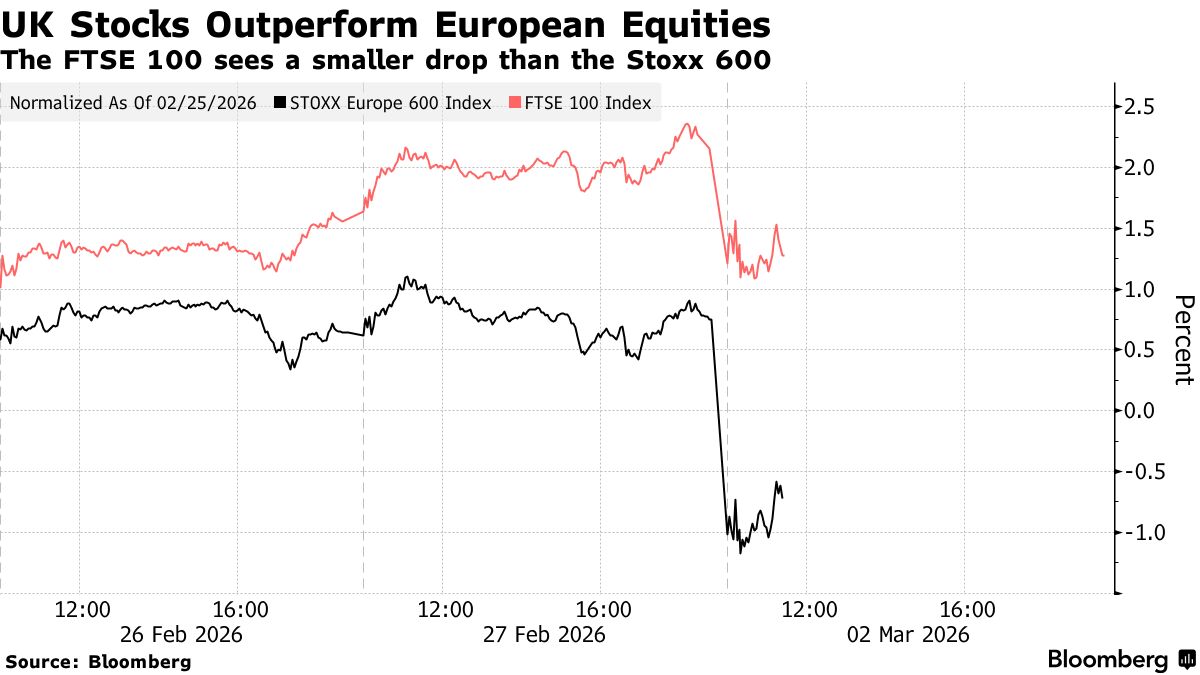
Stock Market Drop as War Happened
Source: Bloomberg
Instead, gold prices typically rise during conflicts as it is seen as a stable asset for investors. Also, government bonds attract more investors as they are considered low-risk investments.
Currency markets are hugely affected by the war as well. The United States Dollar strengthened its value during this situation. Because most of the oil trading is done with dollars, many countries require the acquisition of dollars to pay for them. As the oil prices go higher, those countries will need to have more dollars, which naturally drives up the currency’s value.
However, foreign currencies may weaken as investors pull their money out for the dollars, leading to inflation and economic instability in those countries.
Traveling
The war between Iran and other countries has significantly affected global travel. As the Iranian airspace is closed due to this war, many airlines have rerouted flights to avoid flying over conflict zones. This leads to longer travel times with increased fuel consumption, meaning the ticket prices will increase.
Major international hubs in the Middle East, including Dubai and Doha, are having many flights being delayed or canceled. Due to Iran’s attack on neighboring countries after Israel and the United States’ first attack, many flights were unable to take off as there was a big threat of being shot down on air.

Smoke coming out near Dubai International Airport
Source: NY Times
Tourism has also declined in regions around Iran. In the case of Dubai, one of the biggest tourist places in the Middle East, it has experienced a huge struggle since the war started. In the first week of the conflict alone, an estimated 80,000 hotel and flight bookings were cancelled as visitors evacuated to another country or postponed trips. According to The World Travel & Tourism Council, roughly $600 million worth of revenue in the tourism sector will be lost in visitor spending.
Many iconic landmarks, such as Burj Al Arab, Fairmont The Palm, and Ramadan Tones, have been attacked physically by Iran’s drone attack. Because of the danger, many countries have issued urgent warnings that effectively stopped tourists from entering the city. Analysts from Oxford Economics say if the conflict does not stop, Dubai may face a total loss of $34 million to $54 million in the year of 2026.
The conflict involving Iran has created widespread economic consequences that extend far beyond the region. From rising oil prices caused by disruptions in the Strait of Hormuz to instability in the global economy and declining tourism in major hubs like Dubai, the effects of the war are being affected worldwide.Even as some countries continue limited trade through strategic relationships, the overall uncertainty has driven up costs, disrupted supply chains and increased financial risks.
)
)


)

)